Fuel & AdBlue Monitoring for Trucks

INNOVATIVE

ecoTRUCK platform for fuel and AdBlue monitoring

Fuel costs are one of the largest expenses for transportation companies, typically accounting for 30–35% of total operating costs. Any increase in fuel prices or inefficient fuel consumption directly affects a company's profitability. The transportation and logistics industry faces challenges such as fuel theft from tanks, discrepancies between the amount of fuel purchased and consumed, a lack of transparency in fuel transaction records, and difficulties monitoring AdBlue.

Fully remote

Complete visibility into fuel and AdBlue

The ecoTRUCK platform provides advanced tools for real-time monitoring of fuel and AdBlue levels across your fleet, presenting the data in a clear and useful format. The system continuously collects information about fuel and AdBlue® consumption and current levels in each vehicle, calculates average consumption over selected periods, and determines fleet-wide averages, making it easy to compare the efficiency of individual trucks. In addition, the locations and times of refueling events and fuel losses are recorded, providing a complete picture of each vehicle's fuel usage.

Fuel consumption

Monitor the average fuel consumption of each vehicle

Refueling

Refueling locations and fuel quantities expressed as percentages

AdBlue

Monitor the AdBlue tank level

Fuel level sensors

Read fuel tank levels from fuel sensors

EXPLORE OUR SYSTEM

How does it work?

The ecoTRUCK device retrieves fuel and AdBlue consumption data directly from the vehicle's CAN bus. In addition to monitoring fuel, it also tracks LNG levels and automatically calculates average fuel consumption. All information is presented in charts and reports and can also be shared with external systems through an API.

Fuel monitoring via CAN bus

The ecoTRUCK system monitors fuel levels through each vehicle's CAN bus, reading the tank level from the float sensor. This means we can track how much fuel is in a vehicle's tank at any given moment without installing additional equipment. Readings are recorded based on events—approximately every 500 feet traveled, when there is a significant change in driving direction, and every 15 minutes while the vehicle is stopped. As a result, the chart reflects the actual route rather than a fixed time interval. The system also calculates a vehicle's average fuel consumption over a selected period by comparing the distance traveled with the amount of fuel used. This allows for an objective assessment of fuel efficiency, making it easy to determine whether a particular driver or vehicle is consuming fuel within the expected range or deviating from the rest of the fleet. All calculations are performed automatically, eliminating human error.

Graphic showing fuel consumption data from the vehicle's CAN bus, including average fuel consumption of 33.7 L/100 km, 9 hours of engine operation, and icons representing refueling and driving behavior.
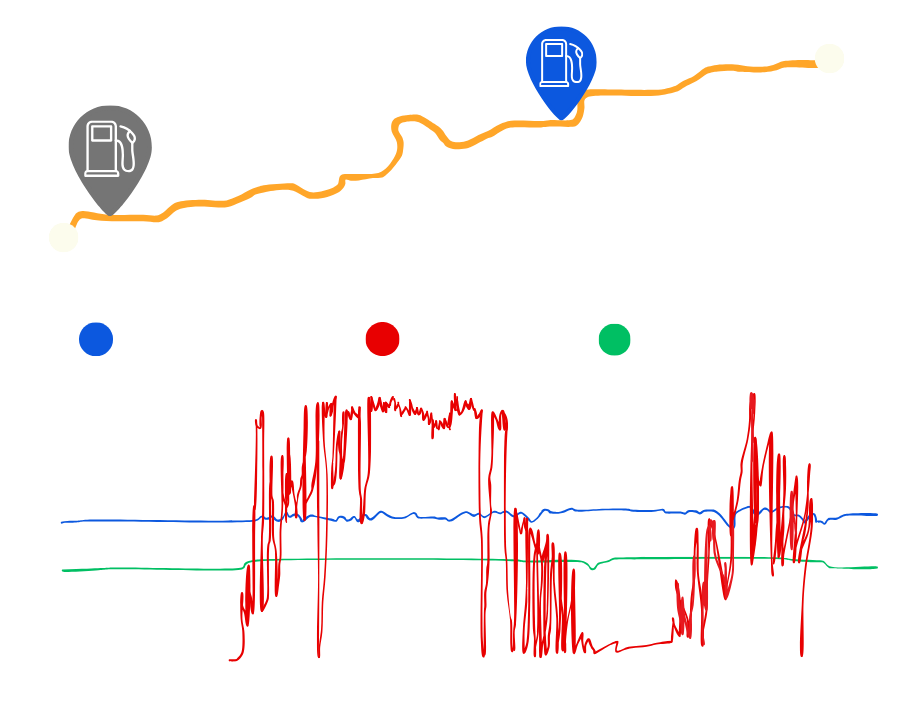
Chart showing changes in fuel level and engine activity over time. Lines and markers indicate refueling events, engine idling, and fuel level drops caused by consumption.

Fuel consumption charts and refueling locations

One of the most practical features is the visualization of fuel consumption through charts linked to refueling locations. In the ecoTRUCK system, every increase in fuel level (indicating refueling) is automatically recorded and marked on both the fuel level chart and the digital map. Users can see exactly where and when refueling took place and how much fuel was added. The vehicle's route is displayed on the map, with refueling locations marked along the way. This provides complete context for each event: you can see not only the amount of fuel added, but also the location (such as a specific gas station) and the time of refueling.

List of all refueling events

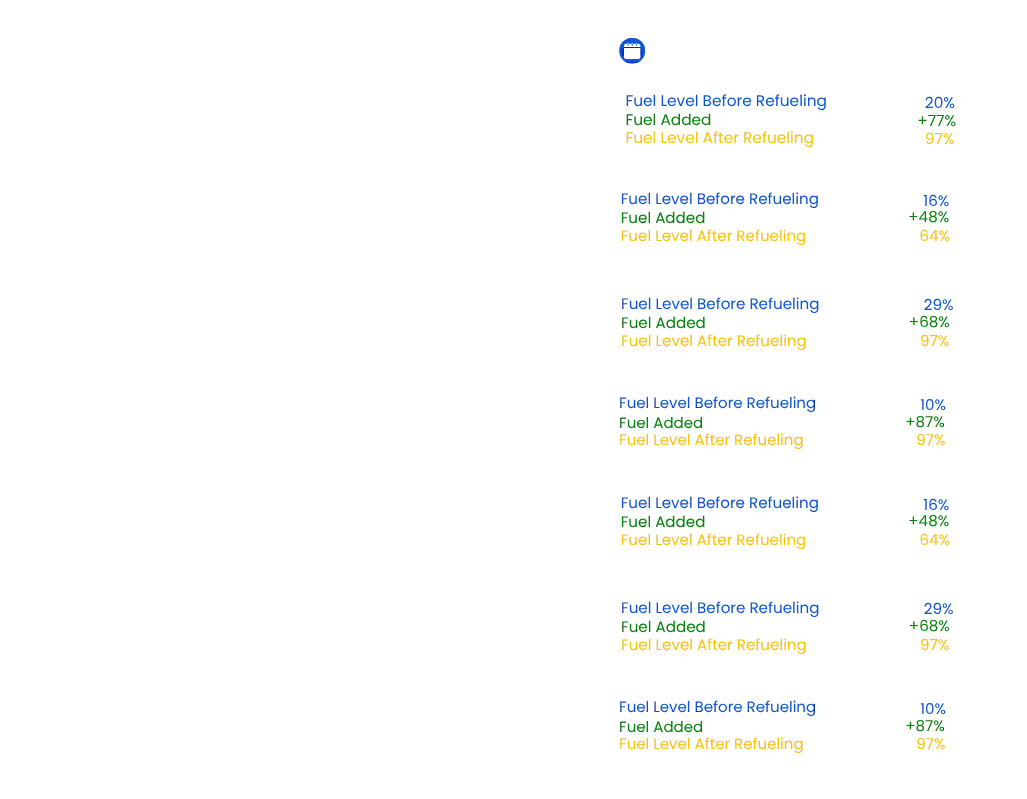
The system displays fuel level changes over time on a chart, including decreases caused by fuel consumption while driving and sudden increases during refueling. The list of all refueling events includes details such as the date, time, location, and amount of fuel added. Additionally, the interactive interface allows users to click any point on the fuel level chart to see where the vehicle was at that exact moment. This means that if you notice an unusual drop in fuel level at a particular time, you can determine the truck's location with a single click—for example, whether it was on the road or parked. This feature makes event analysis much easier and allows you to quickly investigate suspicious situations (such as possible fuel siphoning outside a gas station). This type of refueling monitoring system provides full transparency and allows you to immediately compare a driver's fuel card transactions with actual refueling activity.

Table comparing vehicle refueling records with fuel sensor data, showing fuel levels before and after each refueling event.
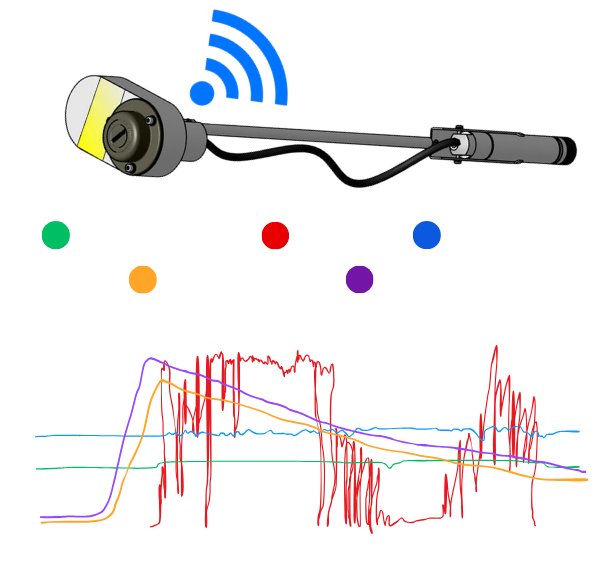
Illustration of a wireless fuel level sensor and a chart showing changes in fuel level, vehicle speed, and route progress. The green, red, blue, orange, and purple lines represent filling, engine operation, vehicle speed, refueling, and the calculated fuel consumption trend, respectively.

Integration with fuel level sensors

The ecoTRUCK platform is compatible with external fuel level sensors available on the market, including analog sensors, which are simple and widely used, and digital sensors, which are resistant to interference. The accuracy of CAN bus readings depends on the vehicle's factory-installed sensor. These readings are usually sufficient for monitoring fuel consumption and tracking refueling, but fleets requiring greater measurement precision may benefit from additional sensors. If a vehicle has fuel level sensors installed in its tank, the system connects to them and compares both data sources, allowing the readings to be cross-checked.

The choice of measurement method depends on factors such as vehicle type, required accuracy, and the risk of fuel theft. See our detailed comparison of CAN bus fuel monitoring and fuel level sensors.


Fuel loss tracking and theft alerts with FUELGUARD

One of the unique features that sets ecoTRUCK apart is automatic fuel loss detection and an alert system for potential fuel theft from the tank. If the system detects a sudden drop in fuel level that is not caused by normal vehicle operation (for example, when a truck is parked with its engine off and fuel is disappearing), it immediately records the incident as fuel loss. It is important to note that fuel theft alerts require appropriate fuel level sensors, either factory-installed sensors or additional probes. This helps ensure effective and reliable fuel tank protection—FUELGUARD™ works with all leading truck brands. Regardless of fleet size, carriers can have greater peace of mind knowing that their valuable fuel supply is continuously monitored by the system.

Yellow warning triangle with an exclamation mark and a warning message indicating a possible connection loss or communication error in the system.
Screenshot showing six transportation statistics: average speed of 27.9 km/h, 38 stops, total distance of 1,067 km, average distance between stops of 10.3 km, total driving time of 2 hours and 29 minutes, and total working time of 27 hours and 3 minutes.

Simultaneous LNG and diesel consumption monitoring

With LNG-powered trucks becoming increasingly popular, ecoTRUCK also addresses these needs. One feature that sets us apart is the ability to monitor LNG and diesel consumption simultaneously in dual-fuel vehicles. In these so-called gas-powered trucks, our system displays both LNG consumption and the amount of diesel fuel injected as a supplement. This allows companies investing in LNG as a cleaner alternative fuel to maintain full visibility into both fuels used by their vehicles, making the entire consumption process transparent.

AdBlue level monitoring

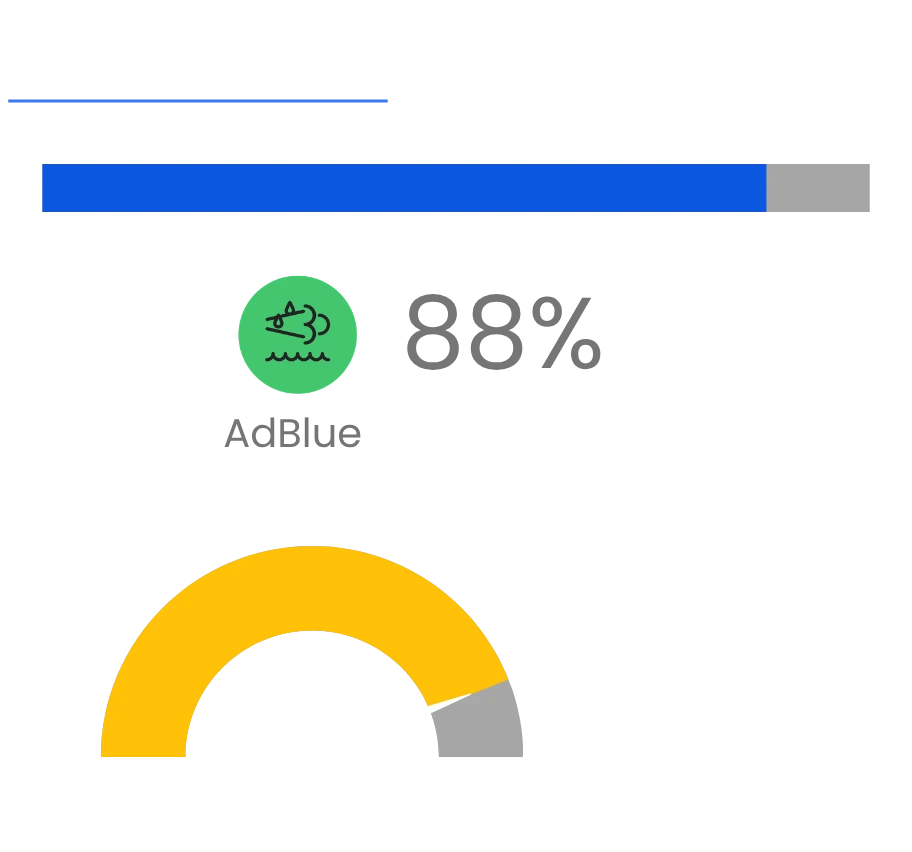
ecoTRUCK also provides AdBlue level monitoring by continuously reading the current AdBlue tank level directly from the vehicle's CAN bus and displaying it as a percentage. This allows dispatchers and fleet managers to know in advance when AdBlue needs to be refilled—the system sends an alert when the level drops below a set threshold. In the ecoTRUCK dashboard, the AdBlue level is displayed alongside the fuel level, providing complete visibility into all essential vehicle fluids. Monitoring AdBlue consumption is just as important as monitoring fuel consumption—excessive AdBlue usage may indicate problems with the SCR system, while running out of fluid can cause vehicle downtime. Regular monitoring prevents situations in which a driver suddenly reports running low on AdBlue while on the road. Instead, ecoTRUCK makes these situations predictable, allowing refills to be planned during scheduled stops. As our customers emphasize, continuous AdBlue monitoring contributes to greater fleet reliability and compliance with environmental regulations.

Real-time AdBlue level monitoring in the ecoTRUCK system, showing fluid levels and vehicle operating data.

Fuel-related challenges in the transportation and logistics industry – how does ecoTRUCK solve them?

Fuel theft from tanks

Unfortunately, large truck fuel tanks are attractive targets for thieves. Losing even several gallons of diesel translates directly into financial losses for the company. Without monitoring, you may not discover the theft until after it happens—for example, when a driver notices missing fuel the next morning. The solution is continuous fuel level monitoring and alerts for sudden drops. With its FuelGuard feature, ecoTRUCK immediately notifies you of unauthorized decreases in fuel level so you can take action right away. As a result, the risk of fuel theft drops dramatically.
Show more

Lack of control over fuel costs

Without detailed fuel consumption data, managing your budget becomes a guessing game. Companies often react only after costs have already gotten out of control. ecoTRUCK helps identify opportunities for optimization—for example, vehicles with above-average fuel consumption or inefficient driving habits, such as excessive idling, aggressive acceleration, or harsh braking. Access to this data can lead to actual fuel savings of up to 5–15% by improving driving habits and eliminating waste. With fuel accounting for as much as one-third of a company's expenses, every gallon saved contributes to better financial performance.
Show more

Manual review of statistics

The system provides detailed records of every fuel loss event, including the date, time, location, and estimated amount of fuel lost. Properly configured alerts (email, SMS, or push notifications) inform the responsible personnel about incidents in real time, allowing them to act quickly—contact the driver, secure the vehicle, or notify authorities if necessary. These records also make it possible to analyze theft incidents afterward, such as checking whether fuel losses regularly occur in specific locations, which may indicate high-risk parking areas or dishonest personnel.
Show more

Lack of time and automation

Traditional fleet fuel management can be time-consuming—collecting receipts, maintaining Excel records, and manually checking whether everything matches. Implementing ecoTRUCK brings a high level of automation to these processes. The system collects vehicle data automatically, without requiring input from drivers or mechanics. There is no longer a need to ask drivers to record the odometer reading and fuel level before and after each trip—all this information is available automatically, along with additional details that drivers might not think to record, such as the exact fuel level fluctuations throughout the journey.
Show more

Why choose ecoTRUCK software?

0 +

Satisfied customers

0 +

Vehicles on the platform

0 +

Supported brands

0 +

Countries served

Get started today!

Request a free demo for your vehicle with fast installation

    The controller of your personal data is ECOTRUCK DIAGNOSIS SP. Z O.O., ul. Wałbrzyska 16A/14, 52-314 Wrocław, Poland.

    Fuel and AdBlue monitoring – frequently asked questions

    The fuel monitoring system analyzes data from the CAN bus and additional fuel sensors, enabling real-time monitoring of refueling events, fuel consumption, and fuel levels in trucks.

    Yes. The fuel monitoring system can detect sudden drops in fuel levels, unusual refueling events, and potential cases of fuel siphoning from trucks.

    Yes. The system can retrieve data directly from the vehicle's CAN bus, enabling more accurate monitoring of fuel consumption and usage.

    Fuel monitoring enables the analysis of driver behavior, engine idling time, and fuel consumption on individual routes. This helps companies identify inefficiencies and reduce unnecessary fuel costs.

    Yes. ecoTRUCK enables companies to compare fuel card transaction data with actual fuel consumption and vehicle refueling records.

    The system enables real-time monitoring of AdBlue levels and consumption analysis, helping companies detect irregularities early and prevent SCR system failures.

    Full transparency and control

    All events—refueling, fuel losses, and fuel levels—are objectively recorded and available for review. This eliminates uncertainty and the need to rely solely on someone's word. Both fleet owners and drivers work with the same shared data, building mutual trust. Transparency also supports better cooperation with business partners and regulatory authorities. In the event of an audit or a customer inquiry, you can quickly generate a report showing how much fuel was consumed during a particular shipment or how the fleet improved its efficiency over the past year. It is worth noting that fuel data transparency goes hand in hand with digital security. Access to the platform is protected and can be granted to different users with different permission levels—for example, a fleet manager can view all data, while an individual driver may only have access to their own results.

    Fuel cost savings


    First, eliminating fuel theft and misuse—every attempt to siphon fuel will be prevented or detected, protecting the company from financial losses. Second, continuous monitoring influences driver behavior. When drivers know that fuel consumption is being monitored and compared, they pay more attention to fuel-efficient driving—avoiding harsh acceleration, unnecessary idling, and speeding, all of which increase fuel consumption. In many cases, this can significantly reduce a company's average vehicle fuel consumption. A seemingly small reduction of approximately 0.21 gallons per 100 miles, multiplied by hundreds of thousands of miles traveled annually, can result in substantial savings.

    One integrated tool

    The ecoTRUCK system combines multiple telematics features, allowing fleet management from a single dashboard. Fuel monitoring is integrated with GPS tracking, driver communication, remote vehicle diagnostics, driver hours tracking (tachograph), and tire pressure monitoring, among other features. This centralized approach saves time and reduces the risk of errors—there is no need to compare data from multiple sources or worry about missing important information. All essential vehicle information is available in one place and can be combined into comprehensive reports.