Remote Engine Derate Removal

INNOVATIVE

Engine power derate removal software for trucks

One of the most critical situations for any trucking company is when a truck becomes immobilized or severely slowed down due to a malfunction. In modern vehicles, it is often not the mechanical failure itself that stops the truck, but an electronic restriction triggered by the fault—commonly known as an engine power derate. As a protective measure, vehicle control systems may limit available engine torque and RPM or even reduce the maximum vehicle speed to as little as approximately 12 mph.

Remote removal

Engine power derate

With ecoTRUCK, this challenging situation may be resolved remotely. Our system allows users to clear fault codes associated with engine power derates, particularly those related to the engine and AdBlue/DPF systems. When the fault memory is cleared, the vehicle's control unit may lift the performance restrictions, depending on the underlying fault and the vehicle's safety systems.

AdBlue

Clear AdBlue fault codes

Power restoration

Gain time to reach your maintenance facility

Fault code report

Easily generate PDF reports.

EXPLORE OUR SYSTEM

Causes of engine power derating

A common reason for entering this type of reduced-power mode is a problem with the emissions control system, such as an AdBlue system failure, a clogged diesel particulate filter (DPF), or a faulty NOx sensor. Many trucking companies know this scenario all too well: an SCR system warning appears on the dashboard, a countdown of miles or hours begins before engine power is restricted, and the driver faces the possibility of being stranded on the roadside hundreds of miles from home.

Clearing fault codes that cause engine derating

Minimize downtime and delivery delays. Thanks to immediate diagnostics and remote troubleshooting, vehicles spend less time out of service and more time on the road. You can avoid situations where a truck sits idle on the roadside because of a minor fault—a quick response allows it to continue its journey. This means meeting delivery deadlines and avoiding contractual penalties for delays. Your customers receive their goods on time, while you maintain your reputation as a reliable transportation partner.

ecoTRUCK diagnostic screen with the ACM module selected, showing no fault codes detected in the AdBlue exhaust aftertreatment system.
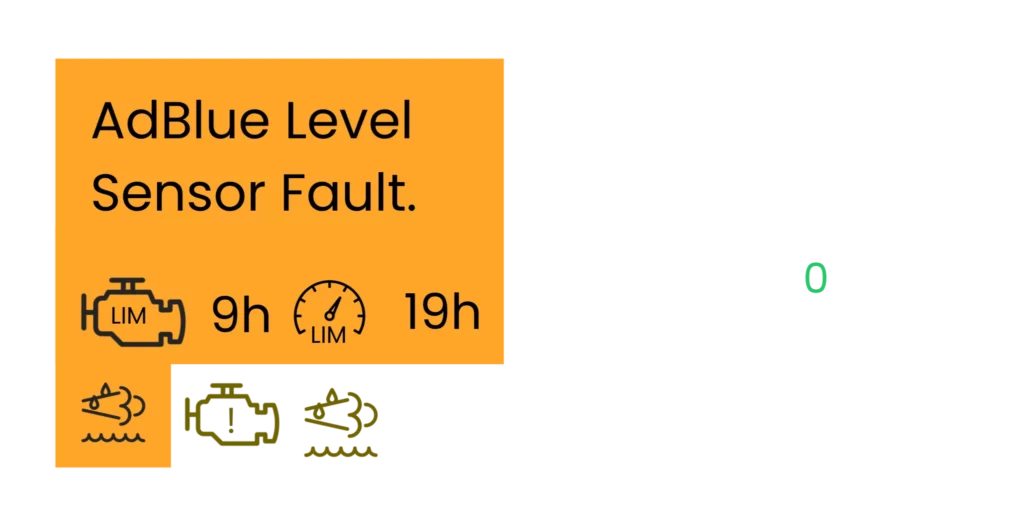
ecoTRUCK warning screen indicating an AdBlue level sensor fault and reduced engine power, with the AdBlue level at 0%.

AdBlue fault

Imagine this scenario: while driving on a highway in Germany, your truck displays an AdBlue system malfunction warning. The system informs the driver that engine torque and speed will be restricted after another 62 miles because of an SCR system malfunction. Normally, the driver would have to find a repair shop immediately—which can be difficult and expensive abroad—or, in the worst case, end up stranded on the roadside as the truck loses power after reaching the specified limit.

Fault identification

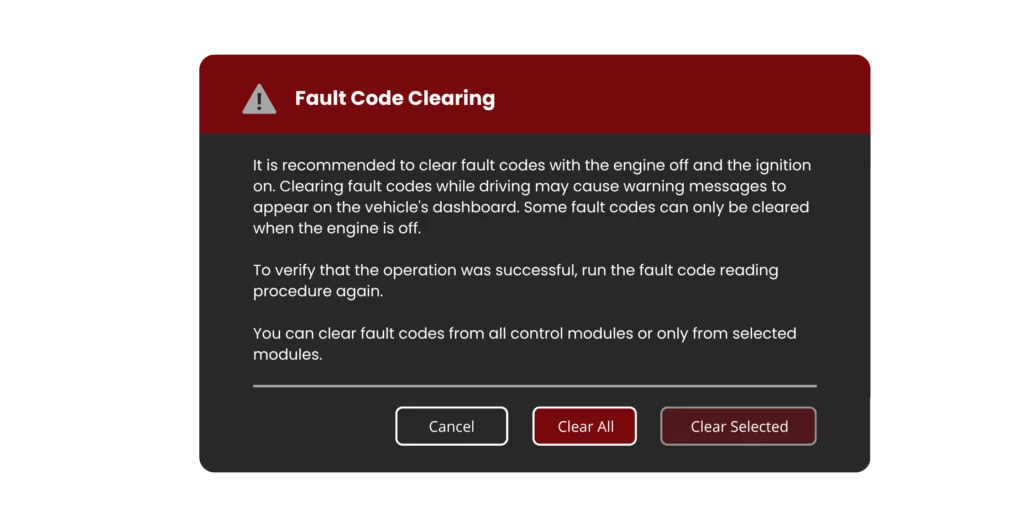
A dispatcher connects to the vehicle remotely and clears critical fault codes within minutes to remove the power restriction. The engine returns to full power, allowing the driver to continue along the highway at normal speed. The delivery is no longer at risk, and the shipment continues as planned.

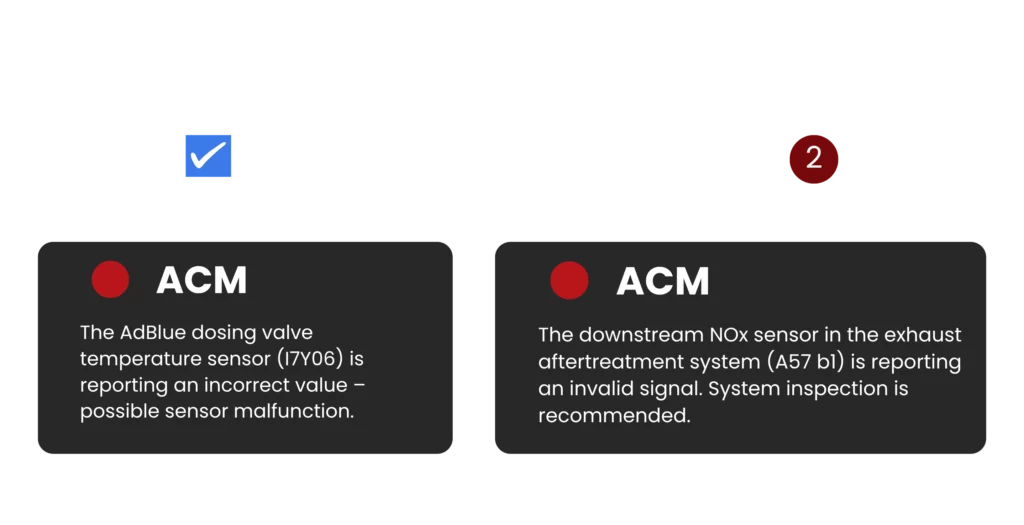
ecoTRUCK diagnostic screen showing temperature sensor and NOx sensor faults in the AdBlue exhaust aftertreatment system.
ecoTRUCK diagnostic dashboard displaying a list of vehicle control modules, active fault codes, and properly functioning systems, including the driver assistance camera, distance sensor, and braking system.

Restoring engine power

Even if the underlying problem—such as a faulty NOx sensor or a failing AdBlue pump—has not been resolved, remotely removing the engine derate can provide several additional hours or days of driving time. The fault may reappear after some time, but the remote reset procedure can then be repeated to keep the vehicle moving. The most important thing is that the truck does not become stranded against the driver's wishes. This gives the driver a chance to reach the company's maintenance facility or at least a safe, convenient location where permanent repairs can be carried out. As a result, you can avoid expensive roadside towing and the consequences of a delayed delivery.

What engine derating challenges does the trucking industry face?

Complex regulations and risk of fines

Emissions control regulations require trucks to operate with properly functioning exhaust aftertreatment systems. Faults involving the SCR system, AdBlue components, or emissions sensors may trigger engine power restrictions and lead to unexpected downtime. Prompt diagnostics help fleet operators identify the underlying problem, arrange appropriate repairs, and reduce the risk of costly interruptions.
Show more

Sudden loss of power on the road

Faults that restrict engine power often appear without warning while a delivery is in progress. The vehicle enters reduced-power mode, loses performance, and struggles to maintain speed, particularly on hills or highways. The result is delivery delays, driver stress, and the risk of the truck stopping in an unsafe location.
Show more

Risk of complete vehicle immobilization

Ignoring faults that restrict engine power can lead to further performance reductions, eventually causing the vehicle to stop completely or preventing the engine from restarting. In modern trucks, protective systems operate in stages, allowing only a limited number of miles or hours of continued driving. Failure to respond quickly can result in towing and high emergency repair costs.
Show more

Increased fuel consumption and component strain

Reduced engine power forces drivers to downshift more frequently and maintain higher engine RPM to keep moving at the required speed. This increases fuel consumption and places additional strain on the drivetrain and emissions control systems. The result is higher fuel costs and faster wear of components that were not originally responsible for the fault.
Show more

How much do diagnostic issues cost you each year?

Fleet: 10 vehicles
Compare annual costs and the impact of implementing ecoTRUCK—all in one place.
WITHOUT ecoTRUCK
  • ⏱️ Downtime: $4,431–$5,907/year
  • 🔧 Repair shop visits: $6,154–$9,846/year
  • 🚚 Towing: $1,477–$3,692/year
  • 🧰 Diagnostic tools: $1,846–$5,292
TOTAL $13,908–$24,737/year
WITH ecoTRUCK
  • 📦 Subscription: $2,400/year
SAVINGS $11,508–$22,337/year
ROI (return on investment) 3–6 months

Engine derate removal – frequently asked questions

The ecoTRUCK system enables fast fault diagnostics and provides support for restoring a vehicle to normal operation while it is on the road.

Engine derating is most commonly associated with SCR system faults, AdBlue issues, or other emissions-related problems in trucks.

Yes. In many cases, remote diagnostics can be performed and the cause of the power restriction can be addressed.

Yes. ecoTRUCK also supports trucking companies operating on international routes throughout Europe.

No. Some problems can be resolved remotely without requiring the vehicle to visit a repair shop.

Fast diagnostics and the ability to respond remotely help reduce vehicle downtime and breakdown-related costs.

Why choose ecoTRUCK software?

0 +

Satisfied customers

0 +

Vehicles on the platform

0 +

Supported brands

0 +

Countries served

Get started today!

Request a free demo for your vehicle with fast installation

    The controller of your personal data is ECOTRUCK DIAGNOSIS SP. Z O.O., ul. Wałbrzyska 16A/14, 52-314 Wrocław, Poland.

    Engine derate removal in Euro 5 and Euro 6 trucks

    It is worth noting that engine derate removal is particularly valuable for modern vehicles that meet strict Euro 5 and Euro 6 emissions standards, where diagnostic and emissions control systems are highly sensitive and can restrict vehicle performance even because of a seemingly minor issue. Emissions-related faults, including those involving the AdBlue system, DPF, or sensors, are among the most common causes of unexpected truck downtime on the road. ecoTRUCK gives trucking companies a tool to address these situations independently—quickly, remotely, and without unnecessary paperwork. You do not have to wait for a decision from the vehicle manufacturer or roadside assistance. Control is back in your hands.

    Clearing fault codes

    This is a lifeline for your fleet. Of course, it does not replace physically repairing the underlying fault, but in critical situations, it can help you meet your commitments to customers and avoid the worst-case scenario. It can make the difference between a fleet that delivers its cargo on time despite unexpected difficulties and one that has to explain why a shipment could not be delivered because of a vehicle breakdown. In the trucking business, that difference is extremely valuable.